Whether you are moving across town or out of state, relocating a home runs on the same sequence of steps. You may have already picked a move date, signed a new lease, or filled the living room with boxes. The residential moving process follows the same order for almost every home, and knowing that order makes the next few weeks easier to plan. This guide walks through the key stages from the first conversation to the final placement of your belongings. It will help you understand what to expect at each stage, and what you can do to keep the day on track.
Above All Moves is a moving company based in Lakewood, Colorado, that handles residential moves locally and out of state. The work itself is practical: a written estimate, a booked date, packed rooms, a loaded truck, and a delivery that puts everything back where it belongs. Knowing the order in advance is what keeps a move from turning into a series of surprises, whether you are leaving a small apartment or a larger home.
What the Residential Moving Process Covers
A residential move runs as a sequence of five stages, and each one produces a result the next one depends on. The chain begins with an estimate and ends with delivery and placement. Whether you are leaving an apartment, a house, or a larger home, the order stays the same. The size of the space affects the volume of work, not the order of the steps.
Each stage hands the next one what it needs. The estimate sets the scope and the budget. The date fixes who is available and when the truck is free. Packing decides how fast loading goes. The way the truck is loaded decides how delivery day goes.
- The estimate is based on property size, distance, and item volume.
- The schedule is confirmed after the estimate and availability are checked.
- Packing is either done by the customer or with professional help.
- Loading day involves careful placement of items on the truck.
- Delivery and placement put everything in the right room and the right spot.
Step 1: An Estimate Built From Your Move Details
The estimate is the starting point. It rests on a handful of details: the size of the property, the number of rooms, the distance between the two addresses, and the volume and type of items being moved. A quote is more than a single figure; it is a breakdown of the work, from labor to equipment and logistics planning. Ask for it in writing, because a written quote is the document you can set beside another one.
When you request the estimate, you will be asked for those details about the property and the items being moved. A quote for residential moving services is built from them, so the room count and the item list matter as much as the distance. Heavy furniture and large appliances are part of that review because they need specialized equipment and time. The figure that comes back itemizes labor, equipment such as trucks and tools, and logistics planning, and it arrives once the move details are shared.
It is important to ask what is included and what is extra, and whether the price changes if the volume changes. Some items may require additional time or care, which could affect the final cost. Above All Moves offers special pricing for military and senior customers. It is an option rather than a discount built into every quote, and it is worth raising when the details are shared so eligibility can be checked before the figure is finalized.
The estimate is the foundation for everything after it: it sets the schedule, the packing plan, and the delivery window. A quote built on real details is what keeps the later stages from being renegotiated on the day.
Step 2: Choosing the Move Date
Once the estimate is in place, the next step is to choose a move date. Weekday appointments from Monday through Thursday are generally easier to place than weekend dates, which are the most requested. Crew availability shapes what can be booked, so the date is confirmed by contacting the company directly. Same-day moves are often possible but depend on the schedule and how busy the crew is, so it is worth asking rather than assuming.
To help with scheduling, have these details ready when you call: the two addresses, the move window, the number of rooms, and any access limits such as stairs, elevators, long hallways, or a parking spot that a truck cannot reach. That list is what the crew plans around, and it keeps the morning from starting with questions. The move date is the first confirmation that the process is moving forward, and it sets the timeline for the rest of the steps.
The confirmation includes the date, the arrival window, and who to call if the date moves. This helps you plan the move around your own schedule and prepares you for the crew’s arrival. The date shapes how the crew is staffed and how the loading day is ordered.
Step 3: Packing Before the Truck Arrives
Packing can be approached in two ways: you do it yourself or you book packing services. If you choose to pack on your own, you have the freedom to move at your pace, but you must be ready by the time the crew arrives. If you book packing services, the crew will handle the task using materials such as bubble wrap and reinforced boxes. They will arrange the packing around your schedule so the boxes are ready when the truck is.
Start by decluttering and donating what you no longer need. Then, pack room by room, labeling each box with the room it came from and noting which boxes should be opened first. It is also important to keep certain items out of the truck, such as documents, medications, chargers, and a few days of clothing. These items are usually kept in a separate bag or box for easy access after the move.
Heavy items and fragile goods need special attention. Glassware, mirrors, artwork, and anything with a screen should be wrapped and boxed differently from books and linens. If you need help with these items, consider packing services for fragile and heavy items. The packing pass is also the step that decides how smoothly delivery day goes, because a box that was packed badly in the kitchen is a problem discovered in the new dining room.
Step 4: Moving Day and Loading
On the day of the move, the crew arrives within the confirmed window and walks through the home with you to confirm what is being transported and what will remain behind. They begin with the rooms furthest from the door, working their way toward the loading area. Starting at the back of the home means the last room cleared is the one beside the door, so the truck fills in the order it needs to unload.
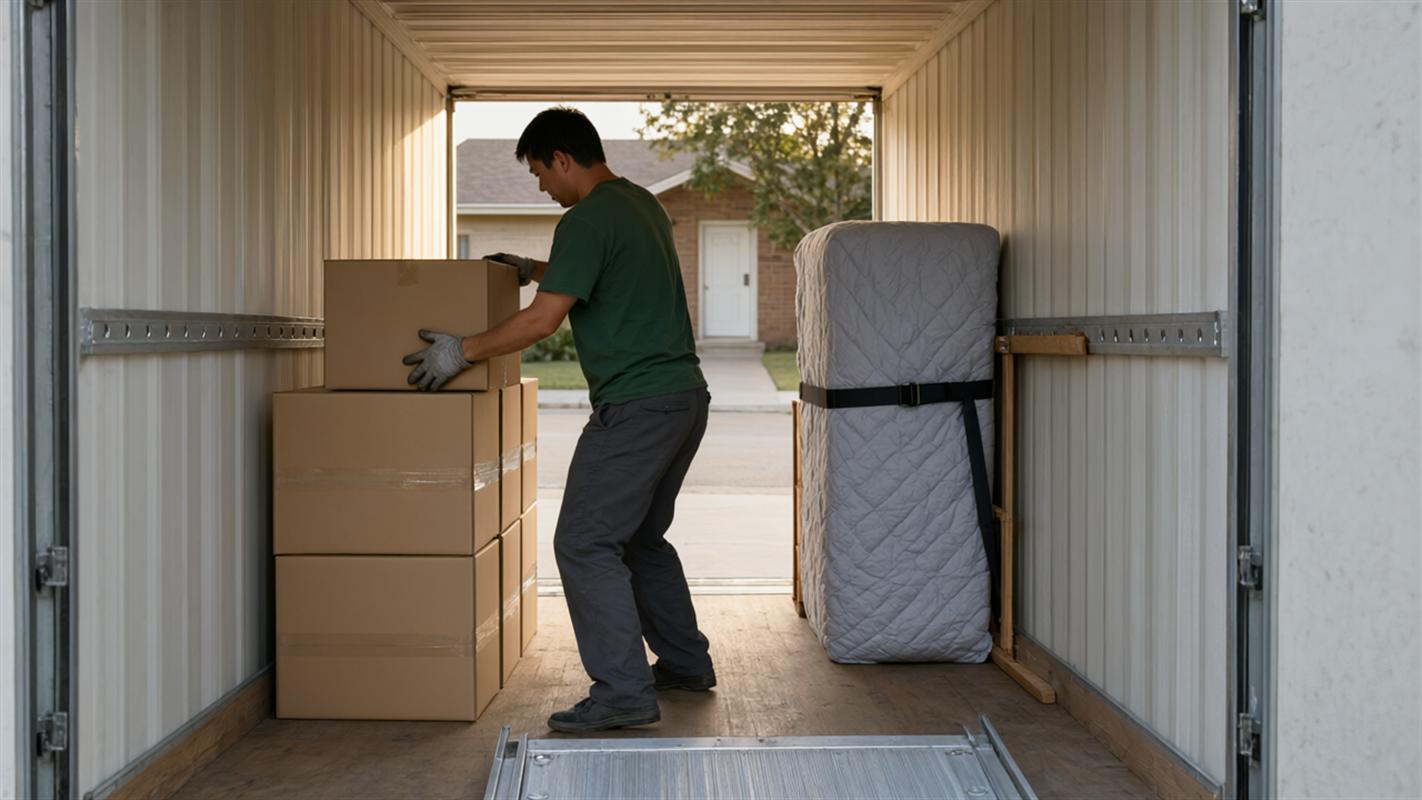
The loading order follows a practical plan: heavy items and case goods are placed low and against the walls of the truck, while lighter and awkward pieces go on top. Everything is tied down so nothing shifts in transit. Your job on this day is to clear a path for the crew, keep children and pets away from the ramp, and stay reachable for any questions. Anything that needs equipment rather than muscle was already priced into the estimate, which is why it is loaded early.
As the crew finishes loading, they walk the home once more, checking closets, cabinets, and the garage for anything left behind. This is a chance for you to review the items being taken and confirm that everything is accounted for. Once the truck is ready to leave, the process shifts to the destination, where the same attention to detail will be applied.
Step 5: Delivery, Placement, and Unpacking
At the destination, the crew checks the inventory and places furniture where you ask. They reassemble any items that were taken apart and set boxes in the rooms they belong to. If you have booked unpacking services, the crew will continue the work until the home is settled. This is the stage where the move comes together and your belongings are in place.
White glove delivery is an option for pieces that need extra care in handling and placement. The handling and the placement both get more attention than a standard load, which is the point of booking it for delicate or high-value pieces. Either way, walk the home with the crew before they leave, room by room, so a misplaced piece is fixed while the truck is still outside.
It is also important to check the inventory list item by item and note anything damaged in writing on the day rather than later. That written record is what gets a problem fixed promptly instead of argued about weeks later. The delivery and placement step deserves the same attention as the ones before it.
Questions Worth Asking Before the Truck Arrives
Before the truck arrives, confirm what the residential moving process includes and what it leaves out. Those terms are easier to read now than in a doorway with a truck waiting. Ask how the move is protected and what coverage options are available, because that answer decides what happens if something arrives damaged.
Who is responsible for disassembling and reassembling furniture? What happens if the closing date moves? How are arrival windows communicated? Those answers decide how the day runs. Get them in writing before the date is booked, not from the crew at the curb.
Key Takeaways
- The quote drives everything after it—schedule, packing, and delivery.
- The move date determines the crew’s availability and the timeline for the move.
- Packing is the stage that decides how delivery day will go.
- The walkthrough at both ends is your main protection against missing or damaged items.
- The sequence is the same whether the move is across town or across states.
Conclusion
A move runs as one chain of five links, and the estimate at the front decides how the rest of them hold. Each stage asks something of you before it can hand off to the next, and knowing what that is takes most of the guesswork out of the day.
With the two addresses and the move window in hand, the next step is the one that starts the chain: request a free moving quote and put a date on the calendar. Above All Moves handles moves across Colorado and nationwide, and anyone who would rather talk it through can call (303) 419-7801.